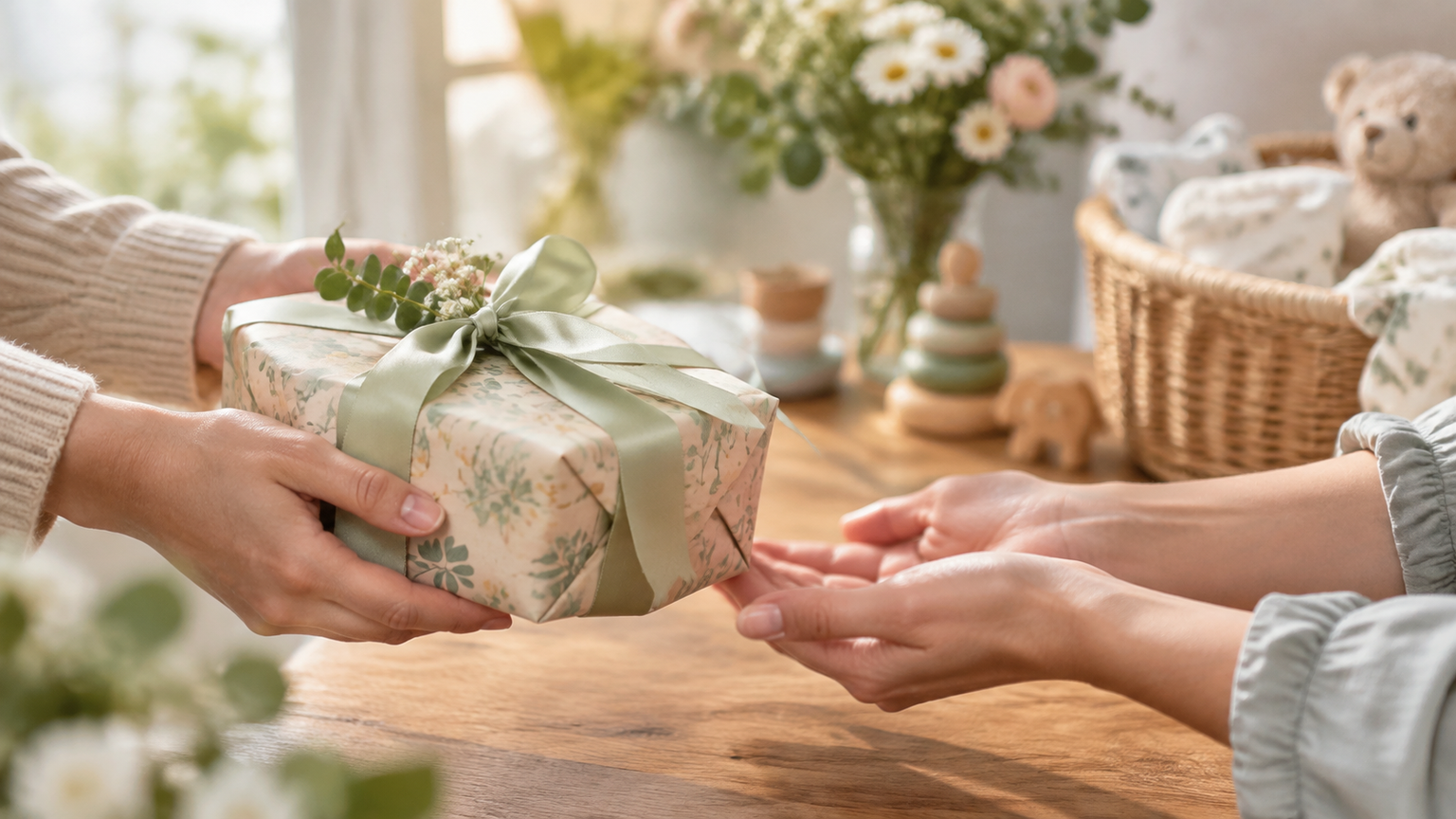
Choosing a baby shower gift can be both joyful and surprisingly complicated. New parents often receive products that touch a baby’s skin, enter the mouth, support sleep, or become part of daily feeding and bathing routines. For that reason, many guests look for non toxic baby shower gifts that are gentle, useful, durable, and made with clear material information.
The phrase “non toxic” is widely used in gift guides and product marketing, but it does not have one universal legal definition for every baby product. A more reliable approach is to look for transparent materials, appropriate safety features, credible certifications, and designs that match the baby’s developmental stage. This guide explains how to shop carefully without assuming that a natural-looking product is automatically safer.
What Does “Non Toxic” Mean for Baby Shower Gifts?
In this context, a non-toxic baby gift is a product designed and manufactured to reduce avoidable exposure to hazardous substances when used as directed. It may be made from materials such as untreated or water-based-finished wood, stainless steel, food-grade silicone, organic fibers, or certified textiles. However, a material label alone does not prove that the finished product is safe for every use.
Safety also depends on construction and instructions. A wooden teether with loose paint, a soft toy with detachable parts, or a crib accessory marketed as “natural” can still create risks. Consider the complete product: its intended age, small parts, coatings, seams, fasteners, cleaning requirements, and whether it complies with applicable safety rules.
In the United States, the U.S. Consumer Product Safety Commission provides guidance for businesses and consumers on regulated products, including toys, children’s products, and sleep-related items. The American Academy of Pediatrics also offers safe-sleep recommendations. These sources are more dependable than a vague “chemical-free” claim.
What to Look for When Choosing a Safer Baby Gift
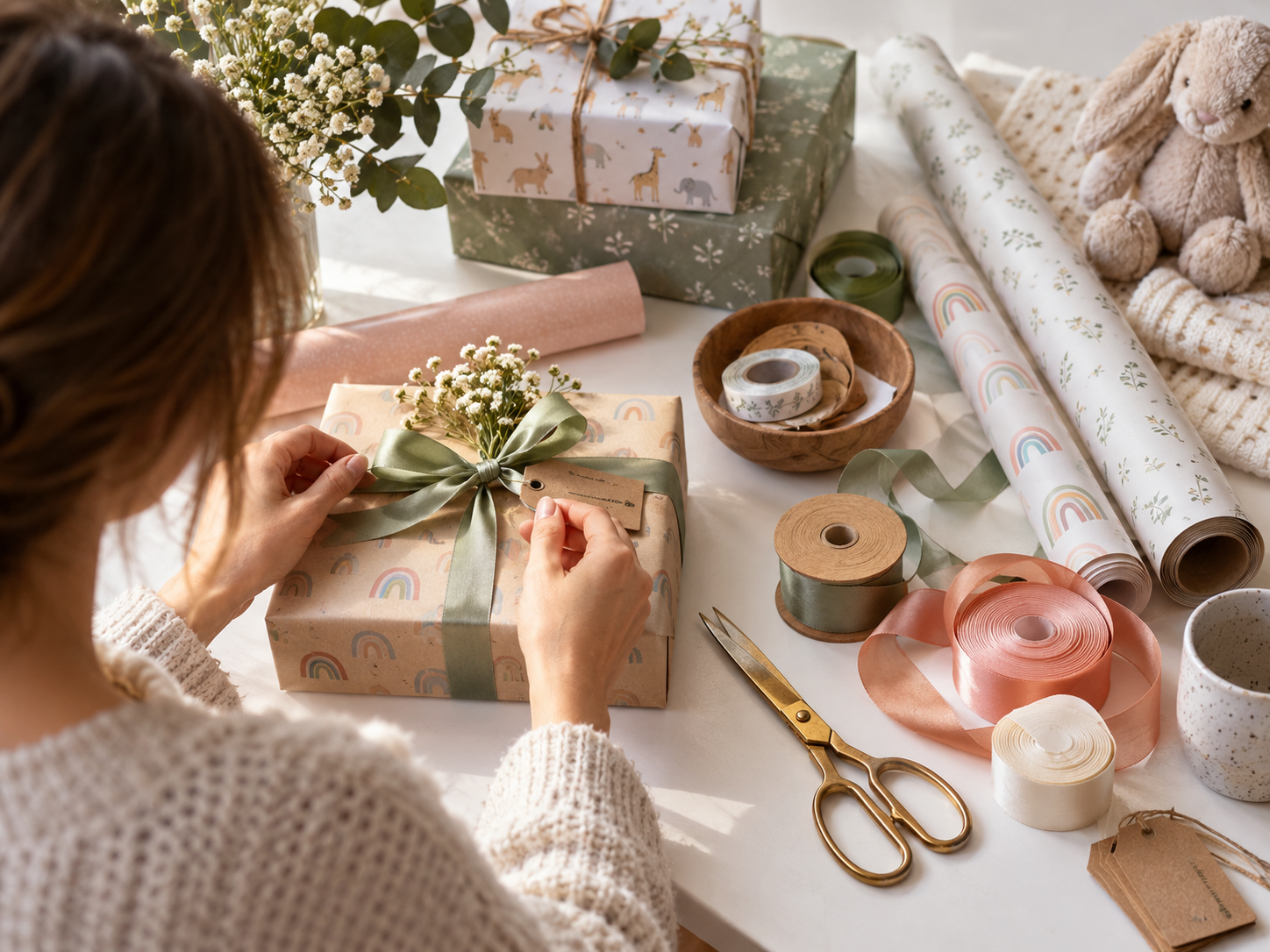
1. Start with the product’s intended use
First ask how the baby will use the item. Products that touch the mouth, skin, or food deserve closer attention than decorative gifts. A bib, washcloth, teether, bottle accessory, or changing mat should have clear care instructions and age guidance. If the product is intended for sleep, follow safe-sleep guidance rather than relying on a “natural,” “organic,” or “breathable” marketing description.
Avoid giving products that are not clearly designed for infants but are presented as nursery accessories. Decorative pillows, weighted sleep products, crib bumpers, and loose blankets can be unsuitable for an infant’s sleep space. A gift can be attractive without being appropriate for unsupervised use.
2. Check materials and finishes
Useful material information is specific. “Made with natural materials” tells you little, while “untreated beech wood,” “stainless steel,” or “organic cotton certified under a named standard” is more informative. For wood, look for a smooth surface, secure construction, and a finish identified by the manufacturer. For textiles, review the fiber content, dyes or finishes if disclosed, and washing instructions.
Be cautious with broad claims such as “chemical-free,” because all physical materials are made of chemicals in the scientific sense. The more meaningful question is whether the product avoids or limits substances of concern and meets the relevant safety requirements.
3. Look for credible certifications, not just symbols
Certifications can help, but each one covers a particular issue. The Global Organic Textile Standard, commonly called GOTS, addresses organic fiber requirements and environmental and social criteria across textile processing. OEKO-TEX also operates several standards; STANDARD 100 by OEKO-TEX focuses on testing textiles and components for certain harmful substances.
Neither certification means a product is risk-free or suitable for every purpose. A textile certification does not automatically address choking hazards, structural strength, or safe sleep. Check the scope of the certification, the certificate or label information, and whether it applies to the actual product rather than only to a raw material.
4. Verify the manufacturer and product details
A trustworthy listing should identify the maker, materials, care instructions, age range, and a way to contact the company. For products used by infants, also look for batch or model information and recall updates. If a listing has only lifestyle photographs and vague claims, it may not provide enough information for a responsible purchase.
Before buying a used or older item, search the CPSC recall database and review the product’s condition. Secondhand gifts can be economical and environmentally considerate, but missing instructions, damaged parts, recalled models, or outdated safety designs can change the decision.
Practical Steps for Selecting Non Toxic Baby Shower Gifts
- Ask about the registry. A registry can show the parents’ preferred materials, colors, feeding approach, and available space. It also reduces duplicate gifts.
- Choose a clear use case. Select an item for bathing, feeding, clothing, diaper changes, play, or organization rather than buying a vaguely “eco” product.
- Read the full product description. Note the intended age, materials, finish, cleaning method, and warnings.
- Inspect safety features. Check that seams, handles, snaps, cords, and attached components are secure. Avoid small detachable parts for babies who may mouth objects.
- Confirm certification claims. Follow the certifier’s own website or certificate lookup process when available. Do not treat a printed leaf symbol as proof of certification.
- Review recalls and returns. A clear return policy matters if the item does not fit the family’s needs or arrives damaged.
- Present instructions with the gift. Keep the care label, age guidance, and manufacturer information so the parents can use the item properly.
Gift Ideas That Balance Safety, Usefulness, and Sustainability
Certified textile essentials
Washcloths, burp cloths, bibs, muslin-style blankets for supervised use, and soft clothing can be practical choices. Look for durable stitching, washable construction, and fiber information. A small set of certified textiles may be more useful than a large bundle containing unfamiliar finishes or unnecessary accessories.
Remember that a blanket suitable for a stroller, nursing cover, or supervised floor play is not automatically appropriate as loose bedding in an infant’s sleep space. Include a note explaining the intended use when the distinction may be unclear.
Simple feeding accessories
Stainless-steel or glass food containers, washable silicone bibs, and appropriately designed utensils can support a lower-waste routine. Select items made for the baby’s developmental stage and check whether they are dishwasher-safe, heat-safe, or intended only for cold food. Avoid assuming that every silicone item is safe for boiling, microwaving, or direct oven use.
Wooden toys and teethers
Choose age-labeled products with smooth surfaces, secure parts, and finishes disclosed by the maker. Avoid toys with long cords, loose beads, magnets, or components that could detach. A teether should be designed specifically for teething and should be inspected regularly for cracks or damage.
Personalized gifts with restraint
Personalized gifts can feel special without adding unnecessary material. Consider an embroidered cotton towel, a name plaque intended for adult-supervised display, or a keepsake box made from a disclosed material. Do not add a baby’s full name, birth date, or other identifying information to an item that will be displayed publicly or carried outside the home unless the parents are comfortable with it.
Useful gift cards and experience gifts
A gift card for a local baby supply store, meal service, laundry service, or professional photography session can avoid unsuitable products and reduce clutter. An experience gift may be appropriate later, but confirm scheduling, cancellation policies, and whether the parents actually want the activity. Practical support is often more valuable than an item selected without knowledge of the family’s routine.
Pros and Cons of Common Gift Categories
| Gift category | Potential advantages | Limitations or cautions |
|---|---|---|
| Certified organic or tested textiles | Clearer information about fibers or tested substances; washable and useful | Certification scope varies; softness and certification do not address choking or sleep safety |
| Wooden toys | Can be durable, repairable, and low in packaging | Paint, splinters, magnets, cords, or loose pieces require inspection |
| Silicone feeding items | Often flexible, washable, and easy to store | Heat and cleaning limits differ; vague material claims are not enough |
| Glass or stainless-steel items | Durable and easy to identify by material | Glass can break; metal can become hot and may be heavy for a young child |
| Personalized keepsakes | Meaningful and potentially long-lasting | May be unsuitable for resale or exchange; avoid small attachments and public identifying details |
| Gift cards or services | Low risk of duplication and useful for different family needs | Expiration rules, restricted locations, or unused services may reduce value |
Limitations of “Non Toxic” Shopping
No ordinary shopper can independently test every product for every possible contaminant. Laboratory testing is usually limited to particular substances, materials, or production batches. Certification standards also differ in purpose, testing methods, and required documentation. A product can meet one standard while still requiring age supervision, careful cleaning, or proper storage.
“Natural” is not a synonym for safe, and synthetic materials are not automatically dangerous. Safety depends on exposure, concentration, design, age, and use. A well-made synthetic product may be more suitable than a poorly finished natural one. The practical goal is not perfection; it is informed selection and appropriate use.
Cost is another limitation. Certified materials, durable construction, and independent testing can increase a product’s price, but higher price is not proof of better safety. Compare information quality and intended use rather than choosing solely by cost or luxury branding.
How to Make the Gift More Eco-Friendly
Eco-friendly gifting can complement a non-toxic approach. Choose durable products, minimal packaging, repairable designs, and items that the family is likely to use repeatedly. A smaller set of high-use essentials may create less waste than a large themed basket filled with single-purpose products.
Handmade gifts can be thoughtful, but the maker should still disclose materials, finishes, washing instructions, and age suitability. Handmade does not automatically mean tested or regulated like a mass-produced children’s product. For anything used in the mouth, during sleep, or without direct supervision, transparency and construction quality are especially important.
Concise Q&A
Is “non-toxic” a regulated label?
Not as one universal category for all baby gifts. Treat it as a claim to investigate. Look for specific materials, safety instructions, applicable standards, and credible certification details.
Are organic baby gifts always safer?
No. Organic claims may describe how a fiber was grown, while safety also depends on dyes, finishes, design, construction, and intended use. Review the complete product information.
What is a safe alternative to a crib gift?
Consider washable clothing, burp cloths, bathing supplies, a registry-listed feeding item, or a gift card. Avoid adding loose bedding, crib bumpers, pillows, or decorative sleep accessories unless the parents specifically need an item that follows current guidance.
Should I buy a used baby product?
Possibly, if it is easy to identify, has no damage, includes instructions, and has not been recalled. Check the CPSC recall database and ask the seller about its history. When in doubt, choose a new, simple item.
What should I include with the gift?
Include the receipt when possible, care instructions, age guidance, and a brief note about the material or certification you checked. This helps parents make their own informed decision.
Final Checklist
- Does the gift have a clear purpose and appropriate age guidance?
- Are the materials, finishes, and cleaning instructions disclosed?
- Does any certification apply to the finished product and relevant material?
- Are there small parts, cords, magnets, loose threads, or breakable components?
- Is the item intended for supervised use rather than infant sleep?
- Can the family return, repair, wash, or reuse it?
- Have you checked for recalls when buying a used or older product?
Safety and informational disclaimer: This article provides general gift-shopping information and is not medical, legal, or product-safety advice for a specific child. Always follow the manufacturer’s instructions, current guidance from the U.S. Consumer Product Safety Commission and the American Academy of Pediatrics, and the parents’ or pediatrician’s recommendations. Stop using any product that becomes damaged or recalled.
Leave a Reply