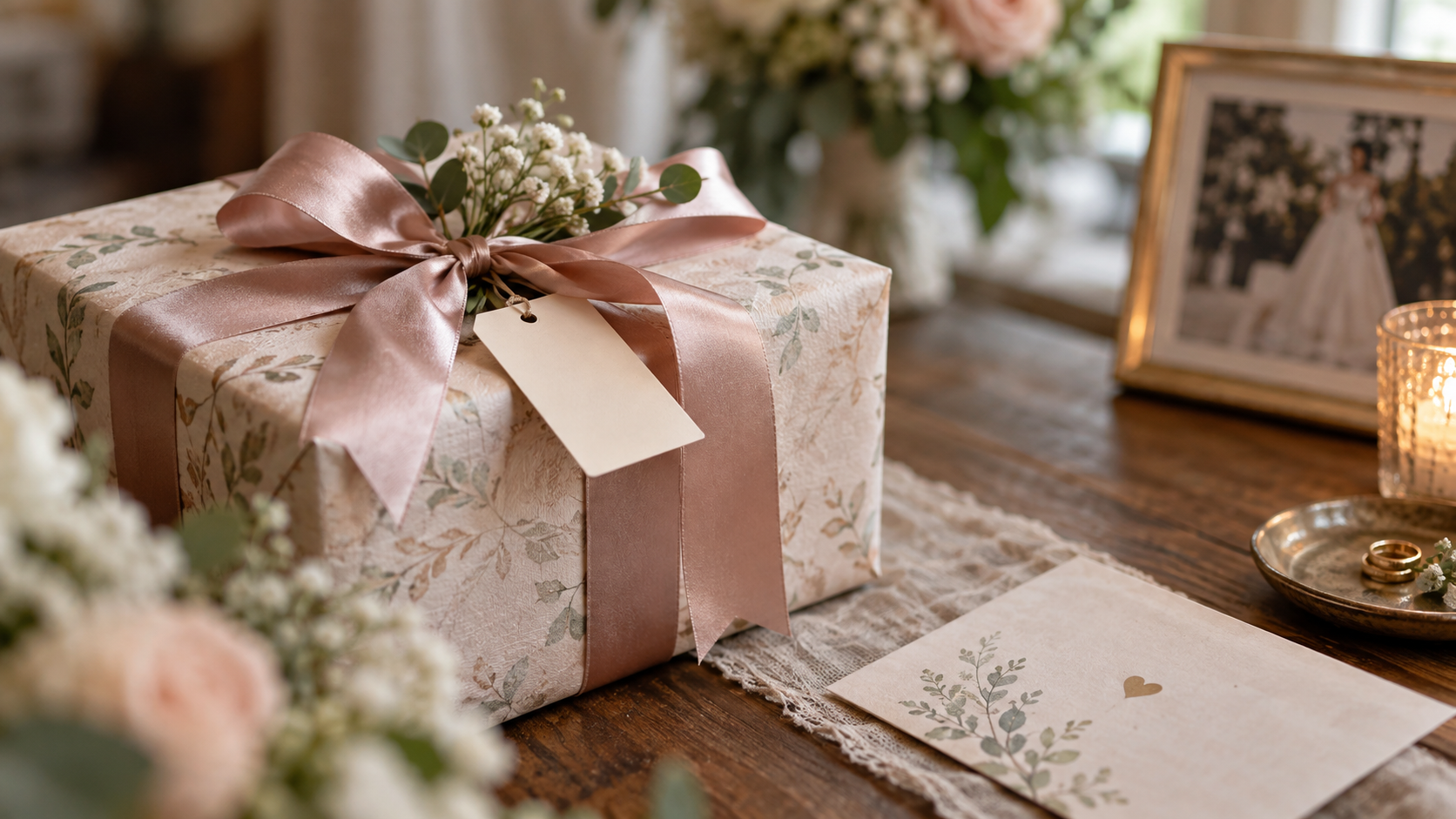
Choosing sentimental wedding gifts from parents is an opportunity to mark a major family milestone with something personal and lasting. The right gift does not have to be expensive or elaborate. It might be a family heirloom, a handwritten letter, a photo album, or an experience the couple can share. What matters most is that the gift reflects the relationship and suits the newlyweds’ wishes.
This guide explains what makes a wedding gift sentimental, offers ideas for different budgets and family traditions, and outlines practical steps for choosing, preparing, and presenting a gift. It also considers the advantages and limitations of personal keepsakes, experiences, and financial contributions.
What Is a Sentimental Wedding Gift From Parents?
A sentimental wedding gift from parents is a present chosen for its personal meaning, family connection, or emotional significance—not solely for its price or practical value. It may preserve a shared memory, pass on a meaningful object, recognize the couple’s future, or express a parent’s hopes and affection.
Examples include a repaired family watch, a collection of family recipes, a letter describing a cherished memory, or a contribution toward a honeymoon experience. The distinction is intent: a useful item can also be sentimental when it carries a thoughtful explanation or connection to the couple.
How to Choose a Gift That Feels Personal

1. Start with the couple, not the occasion
Consider the newlyweds’ preferences, routines, and plans. Do they value family history, shared experiences, practical help, or objects they can use every day? A gift that reflects their lives is usually more meaningful than one selected because it seems traditionally appropriate. If you are unsure, ask them or someone close to them without making the gift a surprise at the expense of their comfort.
2. Choose a source of meaning
A clear personal connection helps a gift feel considered. You might draw on:
- A family story: a letter, recipe book, restored photograph, or keepsake connected to a relative.
- A shared memory: a framed image or a small collection of objects and notes from an important family moment.
- A future plan: a contribution toward a trip, class, home project, or other goal the couple has chosen.
- A personal quality: a book, craft, or piece of art that reflects something you admire about one or both partners.
For a gift intended for both partners, make sure the connection includes both of them. A family heirloom can be accompanied by a welcoming note to the new spouse, for example.
3. Check practical details before ordering
For personalized gifts, confirm names, spelling, dates, preferred wording, and any design proof before production. Ask about lead times, shipping, repair or return terms, and whether the item can be changed if plans shift. These checks matter especially for engraved jewelry, commissioned art, custom furniture, and photo books, which may not be returnable once customized.
4. Decide how you want to present it
A gift can feel more personal when you explain its meaning. Add a short note with an heirloom, provide context for a family photograph, or tell the couple why you chose a particular experience. If you would rather keep the moment private, give it before or after the wedding instead of making it part of a public reception.
Sentimental Wedding Gift Ideas From Parents
A letter for the wedding day or a future anniversary
Write a sincere letter about what you value in the couple and what you hope for them. You can include a specific memory, a family story, or a piece of advice offered gently rather than as a set of rules. Some parents give the letter on the wedding day; others label it for a future anniversary. Keep a copy if the original will be placed in a memory box.
Good fit: couples who value words, family stories, and keepsakes. Consider: personal messages are best shared in a way that respects the couple’s privacy.
A family heirloom with its history recorded
A piece of jewelry, serving dish, book, quilt, or other family object can connect generations. Include a note that says who owned it, how it came into the family, and why you are passing it on. If its history is uncertain, say so rather than presenting a family story as verified fact. Have valuable or fragile items assessed or repaired by a qualified professional before gifting.
Good fit: recipients who enjoy family traditions or objects with a past. Consider: the couple may not have room for, or use for, a large or delicate item. Ask before transferring something that comes with storage or care responsibilities.
A family recipe collection
Gather recipes that relatives actually make, then add brief notes about the people or occasions associated with them. A printed book, a handwritten binder, or a digital collection can work. Check measurements and instructions for clarity, and label ingredients that may be relevant to allergies or dietary preferences. You might include a blank section for the couple’s own additions.
A custom photo book or carefully chosen photograph
Choose images that tell a thoughtful story without turning the gift into a record of only one side of the family. Include captions with names and dates where known. If relatives appear in the images, consider whether the couple will be comfortable displaying them, particularly when the photographs are private or emotionally sensitive. A smaller, well-edited collection is often easier to enjoy than a large, unorganized archive.
A commissioned piece of art
Consider a painting, illustration, or map connected to a meaningful place, such as where the couple met or a market they love. Before commissioning an artist, discuss style, size, framing, delivery, and how much creative control the couple wants. A personalized object should feel like their home, not merely like a parent’s decorating choice.
An experience they can share
Experience gifts can include a cooking class, a weekend away, theater tickets, a guided tour, or a meal connected to a family tradition. Choose an option with flexible dates when possible, and check location, accessibility, dietary needs, expiration terms, and booking requirements. If the couple has demanding schedules, a gift certificate with a clear description may be more useful than a fixed-date reservation.
A practical contribution paired with a personal note
Some couples would prefer help with a home purchase, furniture, a honeymoon, or another stated goal. If you give money, explain that it is a gift and let the couple decide how to use it unless you have agreed on a specific purpose together. A short card can make the gesture personal without attaching conditions they did not accept.
Balancing Sentiment, Budget, and Expectations
Parents may be contributing to wedding costs, giving a separate present, or doing both. These arrangements vary among families, cultures, and individual couples; there is no single gift amount that fits every situation. Set a budget that is comfortable for you and discuss expectations early if wedding expenses and gifts overlap. A heartfelt present does not need to compete with the cost of the celebration.
When several parents or relatives want to contribute, consider coordinating to avoid duplicate gifts or an item the couple cannot use. A shared present can be meaningful, but make sure everyone is comfortable with the arrangement and that the couple’s preferences guide the choice.
Pros and Cons of Different Gift Types
Personalized keepsakes
- Pros: They can be tailored to the couple and kept as reminders of a milestone or family connection.
- Cons: Custom items can take time to produce, may be difficult to return, and can miss the mark if the style or wording is not right.
Heirlooms
- Pros: They carry family history and can connect the newlyweds to earlier generations.
- Cons: They may require maintenance, insurance, storage, or emotional responsibility. The recipient may not want to inherit an object simply because it is important to the giver.
Experiences
- Pros: They create an opportunity for shared time and do not necessarily add another permanent object to the home.
- Cons: Scheduling, travel, accessibility, and expiration dates can make them harder to use. Confirm flexibility before purchasing.
Financial gifts
- Pros: They allow the couple to prioritize a need or goal of their own.
- Cons: They may feel less tangible, and unclear conditions can create awkwardness. Any tax or reporting implications depend on the circumstances and applicable rules.
Common Limitations to Keep in Mind
A sentimental gift cannot guarantee that the recipient will share the giver’s attachment to an object or tradition. Families may remember events differently, and a keepsake intended as loving can bring up grief or complicated feelings. Avoid assuming that a couple wants to continue a particular custom, display an item, or tell a family story publicly.
Personalized gifts also involve practical limits: production delays, spelling errors, fragile materials, restricted returns, or changing wedding plans. Experiences may have booking conditions, and heirlooms may need expert care. Where possible, discuss preferences in advance and retain receipts, certificates, or care instructions.
What Etiquette Sources Say About Wedding Gifts
Wedding customs differ, so etiquette references are best used as guidance rather than rigid rules. The Emily Post Institute’s wedding etiquette guidance discusses gifts in the context of the couple’s preferences and the broader wedding occasion. The wedding planning resource The Knot also offers guidance on wedding gift etiquette and registry choices. For this article, the recommendations are compared at the level of shared practical principles—consider the recipients, avoid treating a gift as an obligation to impress, and choose something appropriate to the relationship—rather than presenting either source as a rulebook for every family.
Parents have a close relationship to the couple, but that does not remove the value of asking what would be welcome. A registry item, a contribution toward a stated goal, and a family keepsake can all be appropriate when they suit the couple and the family’s circumstances.
Frequently Asked Questions
Should parents give a wedding gift if they are paying for the wedding?
That depends on the family’s expectations and finances. Wedding expenses are not automatically a substitute for a personal gift, nor does every family need to make a separate purchase. Discuss the arrangement with your partner or the couple if expectations are unclear.
Is a sentimental gift better than a practical one?
Not necessarily. A practical gift can be sentimental when it reflects the couple’s plans and comes with a thoughtful message. The best choice is one the recipients can appreciate and use or keep comfortably.
When should parents give a sentimental wedding gift?
There is no universal timing. A private family gathering, the wedding day, or a later date can work. Give time-sensitive or custom-made gifts early enough to account for production and delivery, and choose a private setting for personal letters or sensitive heirlooms.
What if the couple does not want more belongings?
Choose a digital family archive, a letter, a meal, a flexible experience, or a contribution toward a goal they have identified. You can also ask whether they would welcome a small keepsake before ordering one.
A Simple Final Checklist
- Does the gift reflect both partners and their preferences?
- Can you explain its personal meaning in a few honest sentences?
- Have you checked names, dates, delivery, care, and return conditions?
- Will the couple be comfortable storing, using, or displaying it?
- Is the cost within your means, without creating unwanted obligations?
When a gift passes these checks, it is more likely to feel thoughtful rather than imposed. A lasting family keepsake, a useful contribution, and a shared experience can all express love. The most memorable choice is often the one that recognizes who the couple are and gives them room to make the gift part of their own story.
Informational note: This article provides general gift-planning guidance, not legal, tax, or financial advice. Rules for financial gifts can depend on the giver, recipient, amount, and jurisdiction; consult a qualified tax professional or the relevant tax authority for guidance on your situation.
Leave a Reply